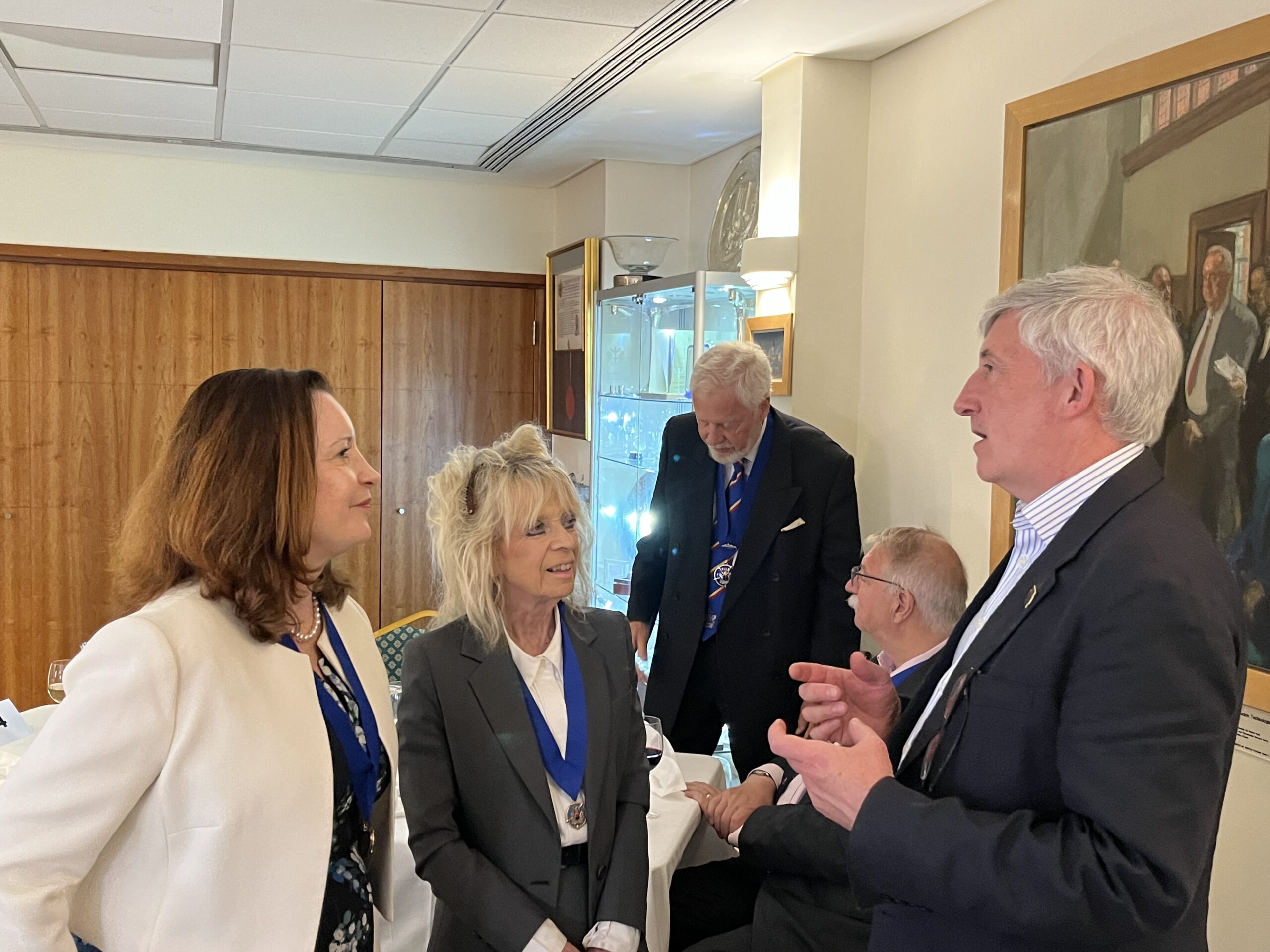
We were delighted to recently host the World Traders 100+ Lunch, this year focused on open data, open banking, and the future of computing.
Our Master, Richard Burge, the World Traders Clerk Liz Garner, and our Court welcomed guests to the elegant and modern surroundings of the Information Technologists’ Hall near the Barbican.
The 100+ Lunch is a tradition started by our Company, welcoming the Master and Clerk of all Livery Companies with a precedence number of 100 or higher.
We were honoured to be joined by the Masters and Clerks of the following Companies:
- Information Technologists (100)
- Water Conservators (102)
- Firefighters (103)
- Management Consultants (105)
- International Bankers (106)
- Security Professionals (108)
- Art Scholars (110)
- Nurses (111)
- Entrepreneurs (112)
- Communicators (113)
- HR Professionals (114)
Guest Speaker: Gavin Starks
Following an excellent lunch, it was time to hear from our guest speaker Gavin Starks. An entrepreneur and a leading global voice in data infrastructure, Gavin is perhaps best known for his instrumental role in creating the UK’s Open Banking Standard and serving as the founding CEO of the Open Data Institute (ODI). Today, through his work with initiatives like Icebreaker One, he continues to advocate for the secure, transparent sharing of data to solve systemic societal and environmental challenges.
Gavin addressed the room on the vital themes of open data, open banking, and how these transformative concepts are expanding into wider sectors of the economy and society.
An Engaging Q&A Session
The address sparked a rigorous and thought-provoking dialogue, reflecting the diverse expertise of the modern Livery Companies present. Below is a record of the excellent questions raised by our guests during the luncheon’s Q&A session:
- Regulating the Tech Giants The Master Security Professional highlighted that a handful of individuals in the United States effectively control the major platforms underpinning our economy, asking: How should society address this concentration of power and regulate platforms that control our economy?
- Safeguarding and Trust The Master Nurse questioned the societal impact of these technologies, asking: What protections exist for children within this emerging system? More broadly, how do we build and sustain public trust in the future of computing, open data, and open banking as these models expand?
- SMEs and Corporate Leadership The Master Information Technologist asked: How does the open banking and open finance model work in practice for SMEs – or is it only the large players who can realistically benefit? He also noted a scarcity of management and security leadership capability within FTSE 250 companies, asking how seriously we should take this gap.
- Data Ethics and Lawfulness The Master HR Professional observed that public trust in established institutions is falling rapidly regarding personal information. They asked: How can we be confident that data held on individuals is being managed lawfully and ethically?
- The Credibility of Official Data A Past Master of our own Worshipful Company of World Traders asked: Can the data published by the Office for National Statistics (ONS) be trusted? If the underlying official statistics are unreliable, what does that mean for the credibility of open data more broadly?
- AI Security and Risk The Master International Banker raised concerns about the foundations of modern analytics, asking: What assurance do we have about the quality of data and the rigour of analysis built on top of it? Is artificial intelligence genuinely secure? Given that so few people appear to understand how these systems work at depth, are we collectively taking an unacceptable risk?
- Data in the Arts The Master Art Scholar brought a unique perspective, asking: How will open data and data security affect the arts? Specifically, can greater openness and security of data enable the arts to flourish and make participation more accessible?
We have since received extremely positive feedback from the visiting Masters, many of whom noted the high calibre of both the fellowship and the intellectual debate. We extend our warmest thanks to Gavin Starks for his brilliant insights, to the Information Technologists for their wonderful venue, and to all the Masters and Clerks who attended and helped make the 100+ Lunch such a success.
